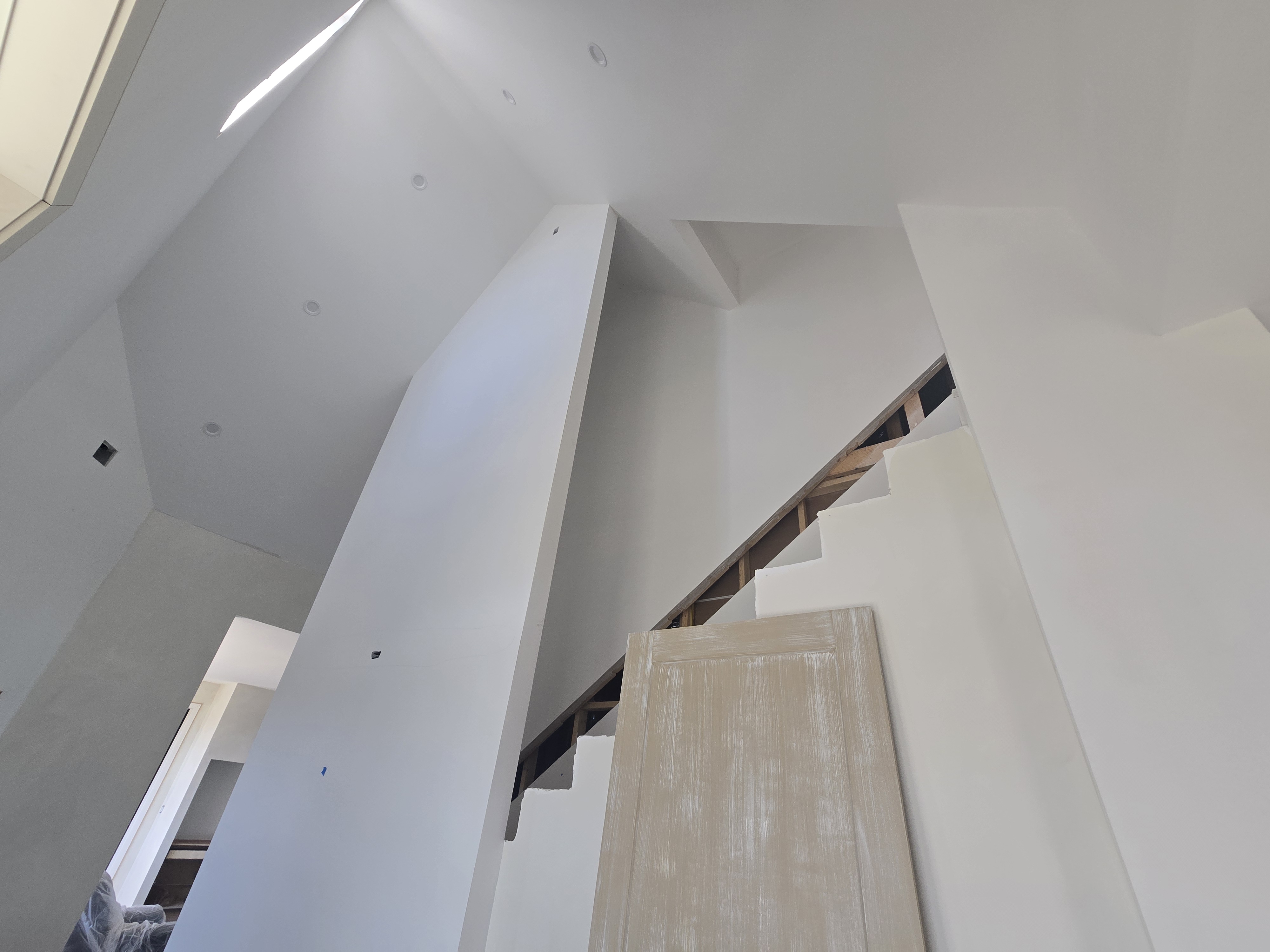
Top Drywall Finishing Techniques for a Flawless Look Dec 13, 2025
Drywall finishing involves several stages, with each step building upon the previous one to create a seamless surface. The first step in this progression is taping. Proper taping is foundational to a clean finish. Begin by applying a thin layer of joint compound along the seams of the drywall boards. Embedding the tape properly requires smooth, even strokes using a taping knife. Paper tape is often preferred for its strength, though fiberglass mesh tape is another option that offers added flexibility and ease of use for beginners.
Once taping is complete, the subsequent steps focus on applying the joint compound—or mud—in successive coats. A key keyword in the finishing process, known as the “three-coat method,” is critical for ensuring durability and smoothness. The first coat, often referred to as the base coat, is a thin layer that fills in imperfections and adheres the tape securely. This is followed by a second coat, which is applied to smooth out any uneven areas left from the first coat. Using a wider knife with each layer helps in levelling the surface effectively, minimizing the visual footprint of any transitions.
The final coat, sometimes called the skim coat, is where the surface gets its premium finish. This requires a light hand and precise timing, as you will need to carefully feather out the edges to blend seamlessly into the existing wall surface. At Johnson Drywall & Paint, we emphasize the importance of allowing each coat to dry thoroughly before moving to the next, as rushing this process can lead to imperfections and require additional sanding.
Sanding is arguably one of the most critical aspects of drywall finishing. For a professional result, a combination of methods can be employed. Start with a medium-grit sandpaper to address larger imperfections or ridges, and progress to a fine-grit paper for smoothing out the surface. Sanding should be done with care to avoid creating surface grooves that might disrupt the perfected look. To reduce dust and improve efficiency, using a pole sander and vacuum sanders can markedly improve the quality of your final finish.
Finally, applying a quality primer before painting is an essential step that many overlook. Priming prepares the drywall to receive paint evenly, preventing any blotchiness or inconsistencies. For the best outcomes, choose a primer that is compatible with the paint finish you intend to use, thereby enhancing durability and finish.
In summary, perfect drywall finishing is an art that requires patience and precision. By understanding and effectively applying these techniques, you ensure that your drywall provides a perfect backdrop for the rest of your décor. Whether tapping into the expertise of professionals at Johnson Drywall & Paint or honing your own skills, mastering these basics will undoubtedly lead to stunning, flawless walls that transform your living space into a true reflection of style and beauty.
/filters:no_upscale()/filters:format(webp)/media/e336e52c-2c26-427f-b92a-1adf46111ff7.jpeg)
/filters:no_upscale()/filters:format(webp)/media/eb023f60-1b03-47f6-8b10-4a7ddee77469.jpg)